Last Updated: October 26, 2026
Quick Summary
How to remove a heavy dresser safely starts with measuring your route and assessing doorways, then emptying and removing all drawers to reduce weight. Use furniture sliders on flat floors, slide rather than lift, and get a second person to help for stairs or dressers over 150 pounds.
- Most dressers weigh between 100 and 300 pounds depending on size and material.
- A single person should not attempt to carry a dresser weighing more than about 50 percent of their body weight.
- Remove drawers before moving, as they add significant weight and create awkward balance points.
- Use furniture sliders on carpet and felt-bottom sliders on hardwood and tile to avoid scratches.
- Never move a heavy dresser up or down stairs alone; this requires a second person at minimum.
Table of Contents
- Assess Your Dresser and Plan Your Route
- Prepare Your Dresser Before Moving
- How to Move Heavy Furniture by Yourself
- How to Move a Dresser Downstairs
- Tools for Moving Heavy Furniture
- Protect Your Space and Prevent Damage
- How to Dispose of an Old Dresser
- When to Hire Professional Removal Help
- Frequently Asked Questions
Assess Your Dresser and Plan Your Route
Before you learn how to remove a heavy dresser, take time to understand what you're dealing with. Measure the dresser's width, depth, and height. Check doorways, hallways, and stairwells along your planned route. A dresser that fits through one doorway might not fit through another.
Look for obstacles. Tight corners, narrow staircases, and low ceilings create problems. Mark these spots on your mental map. If the route is blocked, you may need to remove the dresser's drawers or even disassemble parts of the frame to make it fit.
Assess the flooring too. Hardwood, tile, and carpet each need different protection. Stairs require extra caution. Plan your exact path before you start moving anything.
Weight matters. Most dressers weigh between 100 and 300 pounds depending on size and material. Solid wood is heavier than particleboard. Knowing the approximate weight helps you decide whether to move it alone or call for help.
Prepare Your Dresser Before Moving
Start by emptying every drawer completely. Heavy furniture becomes heavier when loaded with clothes and personal items. Remove everything and set it aside in a safe place.
Next, remove the drawers themselves. This is the single most important step. Drawers add significant weight and create awkward balance points. Set them aside in the order you removed them so reassembly is easier later.
Check if the dresser has a mirror or decorative top that can be removed. Some mirrors are attached with brackets and come off easily. Others are glued or permanently fastened. If it detaches safely, remove it. If not, leave it in place and protect it carefully during the move.
Secure any loose parts. Tighten knobs. Check for wobbly legs or loose joints. A dresser that's falling apart mid-move creates danger and damage. If the frame is damaged, consider whether it's worth moving at all.
Protect the finish by wrapping the dresser in moving blankets or old towels. Use painter's tape to hold the blankets in place. This prevents scratches and protects your walls and doorways from damage.
How to Move Heavy Furniture by Yourself
Moving a heavy dresser alone is possible, but only within clear limits.
Step 1: Empty and strip the dresser. Remove every drawer, the mirror, and any detachable legs or hardware.
Step 2: Clear and measure the route. Walk the exact path first. Measure every doorway, hallway width, and turn.
Step 3: Choose the right sliding method for your floor. Furniture sliders work best on carpet and are the safest solo option there. On hardwood and tile, use felt-bottom sliders or a moving blanket under the dresser to avoid scratching.
Step 4: Slide, don't lift. Place sliders under the two front legs, tilt the dresser back slightly, and push from a low position with your legs, keeping your back straight. Move in short pushes of a few feet, then reposition the sliders under the back legs. Keep your shoulders aligned with your hips and never twist while pushing.
Step 5: Use the see-saw technique for thresholds and small lifts. Tilt one end up a few inches, slide a block or folded blanket under it, then repeat on the other end. Work the dresser forward in small rocking increments.
Solo moving on stairs is not recommended. If you must move a light dresser (under about 100 pounds) up or down a short, straight flight alone, keep the dresser tilted back so the bottom edge leads, keep your back against the wall side, and move one step at a time. But understand the risk: gravity plus a heavy, awkward box is the leading cause of furniture-moving injuries, and a single misstep can send the dresser down the stairs. When in doubt, wait for a second person.
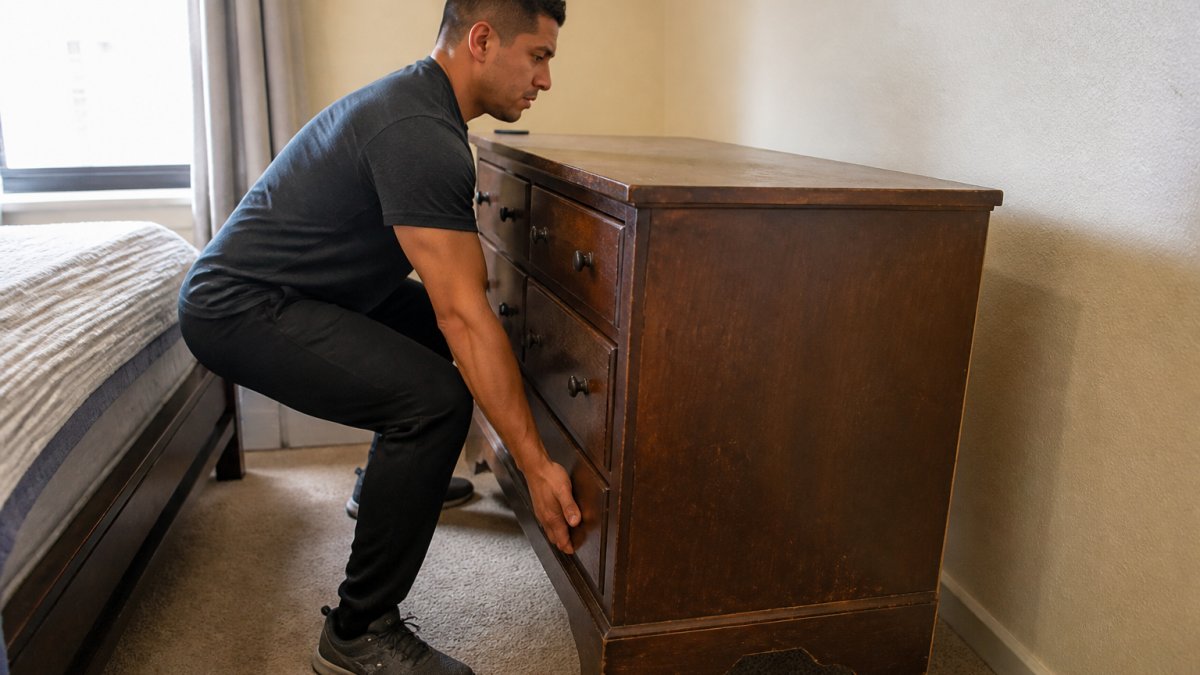
Watch out: Never twist your spine while lifting or moving. Twisting under load causes back injuries that can last for months (the CDC). Keep your shoulders aligned with your hips at all times.
How to Move a Dresser Downstairs
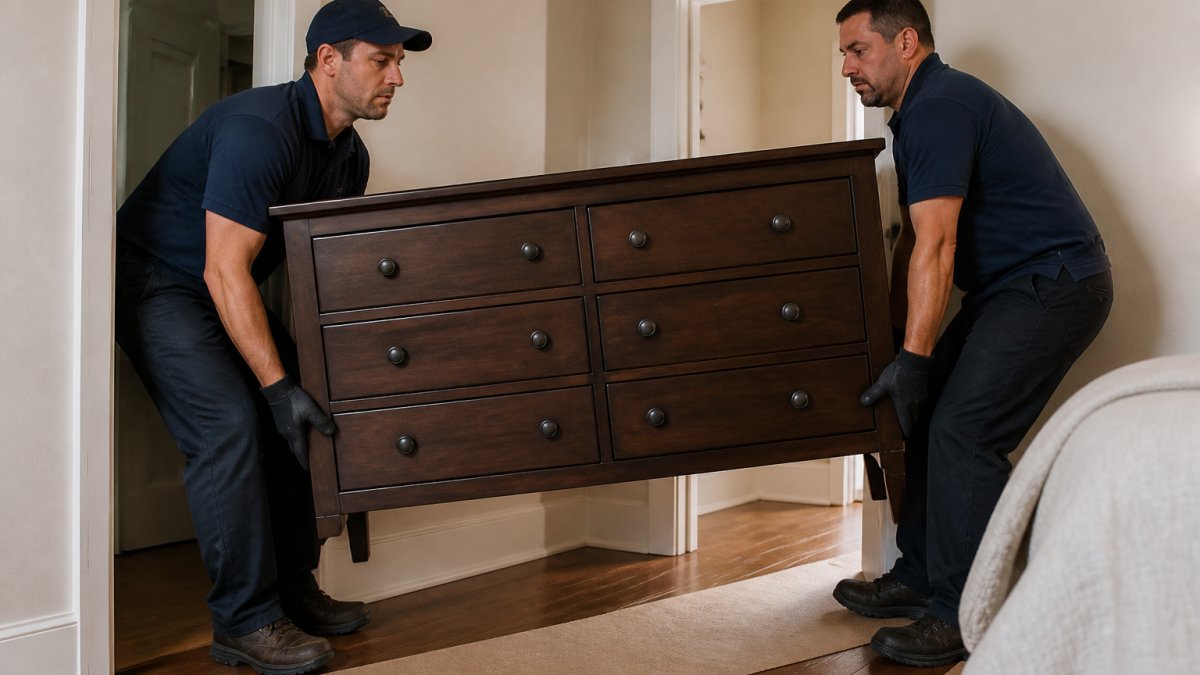
Moving a dresser downstairs is one of the most dangerous furniture moves. The combination of weight, gravity, and narrow staircases creates serious risk. This is where two people become essential.
One person guides from above while the other controls from below. Tilt the dresser slightly backward so the bottom edge leads down the stairs. The person above prevents the dresser from tipping forward. The person below controls the descent and prevents it from sliding too fast.
Move one step at a time. Pause. Reposition your hands. Move the next step. Rushing causes the dresser to gain momentum, which leads to loss of control and injury.
For narrow staircases, you may need to remove drawers or tilt the dresser at an angle. Measure carefully before you start. If the dresser is wider than the staircase, you cannot get it down without professional help.
Consider the landing areas. Ensure there is enough space at the bottom of the stairs to set the dresser down safely. A cramped landing forces you to hold the weight while you maneuver, which exhausts you quickly and increases accident risk.
Tools for Moving Heavy Furniture
The right equipment turns a dangerous lift into a controlled slide or roll.
Furniture sliders (best for flat, single-floor moves). Plastic or felt pads that go under legs or corners. They cut friction dramatically, letting one person push a 200-pound dresser across a room.
A dolly or hand truck (best for doorways and long flat runs). A standard appliance dolly with a strap lets you tilt the dresser back, slide the plate under the bottom edge, strap it, and roll it.
Moving blankets (essential for every move). Wrap the dresser to prevent scratches and to protect walls and doorways it brushes. Use two or three blankets and secure them with painter's tape, not duct tape, which leaves residue.
Lifting straps or a forearm harness (best for two-person carries and stairs). These distribute weight across your shoulders and core instead of your arms and lower back.
Furniture pads and cardboard (budget floor protection). Felt pads under sliders protect delicate floors. Thick cardboard sheets work as makeshift sliders on carpet and as stair-tread protection. They are free but wear out fast on grit, so sweep first.
How to choose by floor type:
- Carpet: plastic sliders or a dolly with a hard path; cardboard works short-term.
- Hardwood: felt sliders or a moving blanket underneath; never slide bare.
- Tile: felt sliders and a protective layer; tile cracks under point loads, so avoid dropping corners.
- Uneven or threshold-heavy routes: a dolly and straps beat sliders, because sliders catch on lips.
What to skip: furniture polish or wax as a sliding aid (it stains floors and does not last), and cheap plastic sliders on tile (they can shatter under a heavy corner). Buy fewer, better tools that match your actual route.
Choose the right equipment based on your dresser's weight, floor type, and route.
| Tool | Best For | Cost | Key Limitation |
|---|---|---|---|
| Furniture sliders | Flat, single-floor moves | $10-$20 | Do not help on stairs or high thresholds |
| Dolly or hand truck | Doorways and long flat runs | Not stated | Awkward on stairs, useless on soft carpet |
| Moving blankets | Every move | Not stated | Require painter's tape, not duct tape |
| Lifting straps or harness | Two-person carries and stairs | $20-$40 | Require a second person and practice |
| Furniture pads and cardboard | Budget floor protection | Free | Wear out fast on grit |
| Protective paper or plastic sheeting | Hardwood floor protection | Not stated | Must be taped down to stay in place |
Protect Your Space and Prevent Damage
Damage to walls, doorways, and flooring is common when moving heavy furniture. Prevention is easier than repair.
Cover doorways and hallway walls with cardboard or protective film. Secure it with painter's tape. This protects the surface if the dresser bumps against it.
Place plywood or thick cardboard on stairs before moving anything. This protects the stair treads from scratches and dents.
For hardwood floors, use protective paper or plastic sheeting along your entire route. Tape it down so it stays in place. Furniture sliders work best on this protective layer.
Remove door frames if necessary. Many doorways have trim that sticks out. If the dresser won't fit, removing the frame gives you extra clearance. It takes 15 minutes and saves hours of frustration.
Check the ceiling height. Dressers are tall. Hallways sometimes have low spots where the ceiling dips. Measure twice. Move once.
How to Dispose of an Old Dresser
When a dresser is too damaged to move or no longer wanted, disposal matters. Throwing it in the trash creates environmental waste and may violate local regulations.
Donate it if it's still usable. Thrift stores, charities, and community organizations accept furniture. Some even pick it up for free. This gives the dresser a second life and helps someone in need.
Sell it online if it has value. Facebook Marketplace, Craigslist, and OfferUp connect you with buyers. Even damaged dressers have resale value for DIY projects or parts.
Recycle the materials. Wood can be broken down and repurposed. Metal hardware can be recycled. Contact your local recycling center to learn what they accept.
For dressers that are broken beyond repair, professional junk removal is an option. Learn how much professional removal costs and what options are available.
When to Hire Professional Removal Help
Some situations call for professional help. If the dresser weighs more than 200 pounds, the route involves multiple flights of stairs, or you have mobility concerns, hiring professionals makes sense.
Learn what to expect from residential junk removal services and compare your options. Get a free, no-obligation quote to understand your options.
If you're ready to hire professionals, book an appointment online.
The decision between DIY and professional help comes down to weight, distance, and your physical ability. Be honest about your limits.
Learning how to remove a heavy dresser safely requires planning, proper technique, and the right equipment. Assess your route, prepare the dresser by removing drawers, and use furniture sliders to reduce strain. For dressers over 150 pounds or moves involving stairs, get a second person to help. Protect your floors and walls during the process. When the dresser reaches the end of its life, donation and recycling are better options than landfill. If the move feels too risky, professional junk removal is an option.
Frequently Asked Questions
Should you remove the drawers before moving a dresser?
Yes, removing dresser drawers can reduce weight and make the piece easier to maneuver. Empty each drawer completely, then slide them out carefully. Reassemble drawers after the dresser is in its new location.
What tools do you need to move a heavy dresser?
Tools that may be used to move heavy furniture include furniture sliders, a dolly, moving straps or a furniture harness, moving blankets, and footwear with good traction.
How do you get a heavy dresser down stairs safely?
Move slowly and deliberately. Have at least one other person nearby. Secure all drawers and hardware before starting. Take breaks frequently, and never rush. If the staircase is narrow or tight, measure doorway clearance first to confirm the dresser fits before attempting the move.
What's the best way to dispose of an old dresser?
Consider donating a dresser in good condition. If it's damaged, check local disposal options. JunkFree offers junk removal and prioritizes recycling and donating usable items.

Got junk? We'll clear it.
Family owned in Fallbrook, serving all of North County San Diego. Book online or get a free, no-pressure quote.